
Landscaping & Gardens
Garden Sleeper Raised Beds, Steps and Walls in Edenbridge
Sleeper raised beds, steps, retaining walls and seating, fixed securely and built to last.
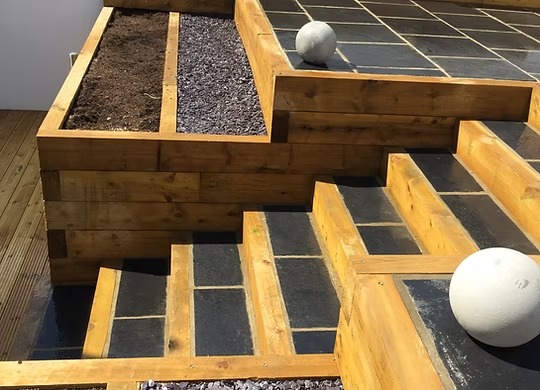
Timber sleepers are a versatile way to build structure into a garden. They make sturdy raised beds, informal steps, low retaining walls and built-in seating with a natural look that suits rural and suburban gardens alike.
One Stop Build & Landscaping builds sleeper features around Edenbridge, often alongside patios, decking or planting.
What sleepers can be used for
- Raised vegetable and flower beds
- Steps on gentle slopes
- Low retaining walls and terraces
- Built-in benches and seating
- Edging for lawns, paths and gravel
Building sleeper structures properly
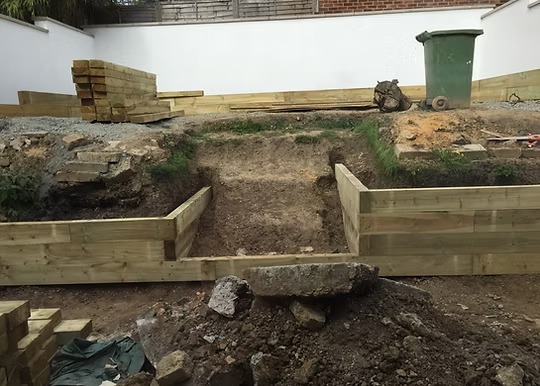
Sleepers are heavy and need secure fixing. Retaining walls are anchored with posts set into the ground and the courses fixed together, with drainage behind so water does not push the wall over. Taller retaining walls need extra design consideration, and masonry may be more suitable.
Choosing sleepers
New treated softwood and hardwood oak sleepers are both used. Reclaimed railway sleepers treated with creosote are not suitable for gardens, especially for food growing or seating.
Cost and timing
Price depends on the number and type of sleepers, height, ground conditions, excavation and any soil or planting. Oak costs more than softwood but lasts longer.
Planning garden sleepers?
Send a few photos and your postcode for a free, no-obligation quote.
Garden Sleepers: before and after
Drag the handle, or use the arrow keys, to compare each project before and after the work.
Garden Sleepers questions
How long do garden sleepers last?
Are railway sleepers safe for vegetable beds?
How high can a sleeper retaining wall be?
How are sleepers fixed together?
Can sleepers be used for steps?
Should raised beds have a base?
Oak or softwood sleepers?
Can you fill the beds with soil?
Do sleepers need treating after installation?
What do you need for a quote?
Request a free quote
Tell Rob about your garden sleepers project. Prefer to talk? Call 07947 331314.