
Landscaping & Gardens
Pond Construction & Water Features in Edenbridge
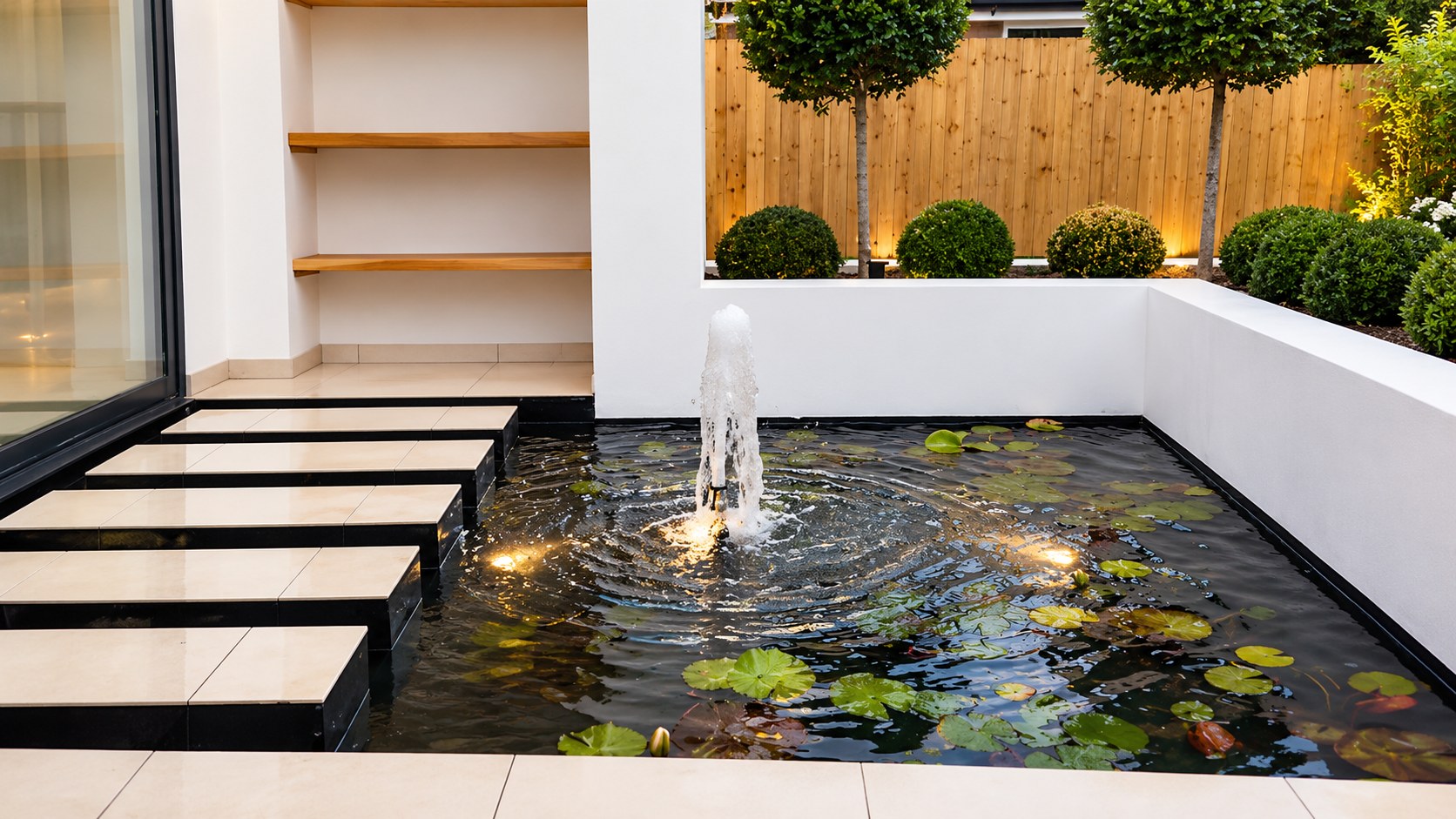
Purpose-built garden ponds and water features, designed with the surrounding paving, planting and decking.
Moving or still water brings a garden to life. A well-built pond attracts wildlife and becomes a natural focal point; a water feature adds sound and movement even in a small courtyard. Both work best when they are planned as part of the garden around them, not dropped into a lawn.
One Stop Build & Landscaping constructs ponds and water features across Edenbridge and the surrounding towns, and because the business also lays paving, builds decking and installs sleepers, the edges, paths and seating around the water can be designed and built at the same time.
Pond or water feature: which suits you?
A pond is a body of water with its own ecosystem. It might be a wildlife pond with gently sloping edges and native planting, an ornamental pond with formal edging, or a pond intended for fish, which needs more depth, filtration and careful planning.
A water feature is usually a self-contained element such as a bubbling stone, a cascade or a fountain with a hidden reservoir. It gives the sound and movement of water with less open water, which can make it a better choice where young children use the garden or space is limited.
Siting and design considerations
- Sunlight: a balance of sun and shade helps plants and limits algae.
- Trees: overhanging trees drop leaves and roots can damage liners.
- Ground and levels: soil type, slopes and existing services affect excavation.
- Views: placing water where it can be seen from the house or patio adds enjoyment.
- Safety: consider who uses the garden, especially young children.
- Power: pumps and filters need a safe electricity supply installed by a qualified electrician.
How a pond is constructed
Construction usually begins with marking out and excavating the shape, including any shelves for marginal plants. The hole is checked for level, sharp stones are removed and a protective underlay is laid before the liner is fitted. Edges are then finished with stone, paving, sleepers or planting, and the pond is filled.
Where pumps, filters, lighting or fountains are included, their position and the route for cables and pipework are planned before the edges are finished, so equipment is accessible for maintenance but discreet.
Designing the surroundings
The area around the water often makes the biggest difference to how the finished feature looks. Paving or decking beside the pond creates somewhere to sit and watch; stepping stones, sleepers and planted margins soften the edges. Planning these at the same time as the pond means levels, materials and drainage work together.
What affects the cost
Size and depth, ground conditions, removal of spoil, the type of liner, edging materials, pumps, filters and lighting, the surrounding landscaping and access for excavation all influence price. A fish pond with filtration is typically more involved than a wildlife pond or a self-contained water feature.
For a free quote, send photographs of the area, rough dimensions, your postcode, the type of pond or feature you have in mind and a note on access for removing soil.
Maintenance and aftercare
Ponds need some regular attention: removing fallen leaves, thinning plants, topping up in dry spells and cleaning pumps and filters according to the manufacturer’s guidance. Self-contained water features generally need their reservoir topped up and pump cleaned periodically. Rob can explain what your particular feature will need.
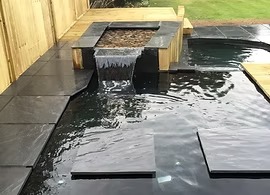
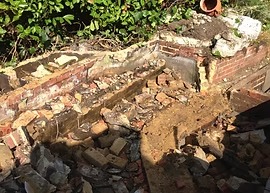
Ponds & Water Features: before and after
Drag the handle, or use the arrow keys, to compare each project before and after the work.
Often combined with
Patios & Driveways
A patio beside the pond creates a place to sit and enjoy the water.
Learn moreFencing, Decking & Sleepers
Decking and sleeper edges frame the pond and handle changes in level.
Learn moreBuilding & Construction
Brickwork and stone walls can be used for raised or formal ponds.
Learn morePonds & Water Features questions
What type of pond is right for my garden?
Where is the best place to put a pond?
How deep should a garden pond be?
What is the difference between a pond and a water feature?
Are ponds safe with young children around?
Do I need a pump and filter?
What happens to the soil that is dug out?
Can you renovate or rebuild an existing pond?
How much maintenance does a pond need?
Can the pond be built with a patio or decking around it?
Request a free quote
Tell Rob about your ponds & water features project. Prefer to talk? Call 07947 331314.